

Commercial Leases on the Gold Coast: What Every Business Tenant Must Understand Before They Sign
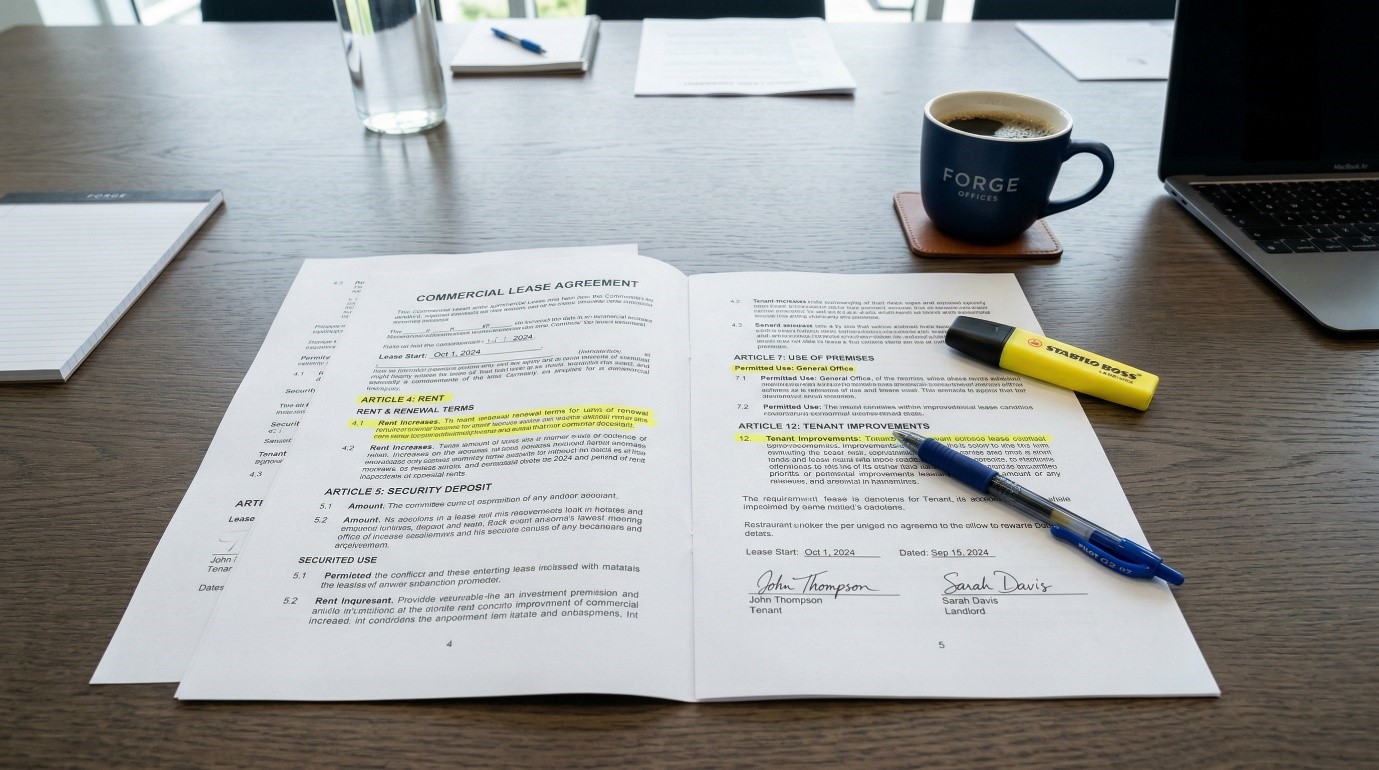
A commercial lease is not a formality. It is a legally binding document that can lock your business into obligations for five, ten or even fifteen years, and many of those obligations are not obvious from a quick read of the first page.
At QC Law, we regularly see the consequences of unsigned and unreviewed leases. Tenants were surprised by a $30,000 bill to replace an air conditioning system. Business owners are facing a mandatory full refit of their premises just five years into a lease they thought was straightforward. Restaurateurs spending $120,000 on a fit-out only to discover the lease required them to do it all again within five years.
These are not unusual stories. They are the kinds of things our commercial team on the Gold Coast deals with every week.
The good news is that most of these situations are entirely avoidable if the right advice is sought before the document is signed.
Who Writes the Lease and What That Means for You
The first thing every prospective tenant should understand is that a commercial lease is drafted by the landlord’s lawyer, in the landlord’s favour. That is the starting point. The document you receive is not a neutral template. It is designed to protect the landlord’s interests, and it is your job to make sure your interests are protected, too.
Commercial leases are typically long documents. In our experience, most of what we review is around 60 pages. They contain detailed provisions covering rent and rent reviews, outgoings, maintenance obligations, make-good requirements, fit-out conditions, assignment rights, options to renew and a wide range of other matters that will directly affect how you run your business.
Signing without reading, or reading without understanding, is a risk that can cost you dearly over the term of the lease.
The Clauses That Catch Tenants Out
Maintenance and Air Conditioning Obligations
One of the most commonly misunderstood areas of a commercial lease is who is responsible for maintaining and repairing the premises, and at what point a repair becomes a replacement that falls to the tenant.
Air conditioning is a classic example. Many commercial leases include provisions requiring the tenant to maintain air conditioning systems, including regular servicing every six months. On the surface, this seems reasonable. The issue arises when the system reaches the end of its useful life and needs to be replaced entirely.
We had a client leasing a commercial premises whose air conditioning system failed. Under the terms of their lease, the replacement cost was theirs. The bill was $30,000. They had no idea this was their responsibility until the system stopped working.
In another recent matter, a tenant was required to prove a full maintenance history for the system when it broke down. They could not produce the records, which further complicated matters under the lease.
These are provisions that can be negotiated before signing, or at the very least understood so the tenant can make a genuinely informed decision about whether to proceed.
Make-Good Obligations
Make-good clauses set out what a tenant must do to the premises at the end of their lease before returning the premises to the landlord. This can include removing all fit-out, repainting walls, replacing flooring, and returning the premises to its original condition.
Depending on what a tenant has spent on fitting out their space, make-good obligations can represent a high cost at the end of the lease term. This is not money that comes back to you. It is an exit cost, and it needs to be factored into the commercial decision of whether to take the space in the first place.
Fit-Out Conditions and Refit Requirements
For businesses taking new commercial premises, a fit-out agreement is often negotiated alongside the lease. In some cases, a landlord will contribute to the cost of the fit-out in exchange for certain conditions, including the right to approve what is installed.
More significantly, some leases include clauses requiring the tenant to carry out a full refit of the premises at certain intervals during the lease term.
We recently acted for a client opening a restaurant who had invested around $120,000 in fitting out their new premises. When we reviewed the lease, we found a clause requiring a full refit within five years. The client had a five-year lease with a five-year option. The prospect of spending another $120,000 before they could even exercise their option was not something they had budgeted for, and they were not prepared to accept it.
We negotiated to have that clause amended before the lease was signed. The client ended up with a much more commercially sensible outcome, but only because the issue was identified and addressed before they committed.
Outgoings
Commercial leases frequently require tenants to pay a share of the building’s outgoings, in addition to their base rent. Outgoings can include council rates, water rates, building insurance, cleaning of common areas, and various other costs associated with running the building.
What concerns our team is not that outgoings exist, but that leases sometimes allow landlords to recover outgoings from prior periods they did not charge for at the time. If you are five years into a lease and the landlord suddenly wants to recover costs from year two, that is a significant and unexpected liability.
Understanding exactly what you are liable for and whether there are any caps or limitations on outgoings adjustments is an important part of any lease review.
Retail Shop Leases: Additional Requirements
If the premises you are leasing are a retail shop, there are additional legal obligations under the Retail Shop Leases Act that both landlord and tenant must comply with.
One of the most common misunderstandings we encounter is tenants believing that all they need to do is sign a one-page form confirming they have received legal advice. In reality, that form can only be signed after we have reviewed the full lease with you, explained your rights and obligations in detail, and provided you with proper legal advice about what you are agreeing to.
You will also need a financial advice certificate, signed by your accountant or financial advisor, confirming that you have received financial advice regarding the lease. This is a separate requirement and one that many tenants are not aware of.
These requirements exist for good reason. A retail lease is a major financial commitment, and the law recognises that tenants need to go into it with open eyes. Our job is to make sure that actually happens.
What Can Be Negotiated
Tenants often assume that a commercial lease is a take-it-or-leave-it proposition. In reality, most leases are negotiable, particularly before you sign.
Things our team commonly negotiates on behalf of tenants include: maintenance obligations and air conditioning responsibility, make-good clauses and the extent of end-of-lease restoration, fit-out contribution amounts and landlord approval rights, refit schedules and intervals, rent review mechanisms (CPI vs. fixed percentage increases), and options to renew and the terms on which they can be exercised.
The key is to raise these issues before signing, not after. Once you are in the lease, your leverage disappears. A landlord who is motivated to secure a tenant at the outset becomes much less flexible once you have already committed.
Get Advice Before You Commit
If you are looking at a commercial premises on the Gold Coast or anywhere in Queensland, the single most valuable thing you can do is have a commercial lawyer review the lease before you sign it.
At QC Law, we regularly review commercial leases and know what to look for. We will explain your obligations clearly, flag the clauses that are likely to cause problems, and, where possible, work with you to negotiate better terms. Our fixed professional fees mean you know exactly what the advice will cost before we start.
The cost of a lease review is a fraction of what a problematic lease can end up costing you. Contact our commercial team today before you put pen to paper.
Contact QC Law: epost@qclaw.com.au | 07 5657 1928